Watercolor Banner Photoshop Brushes Review
As a digital product creator who has spent years navigating the competitive landscapes of Etsy, Creative Fabrica, and Shopify, I approach every new graphic design asset with a specific set of criteria. It is not enough for an item to look pretty; it must be versatile, scalable, and capable of driving sales when integrated into a commercial collection. Recently, I acquired the Watercolor Banner Photoshop Brushes to test their viability for my upcoming spring print-on-demand line and a series of seasonal Canva templates. This review details my practical experience using these tools to build sellable products, focusing on how they perform in real-world business scenarios rather than just aesthetic theory.
First Impressions: Mood and Market Appeal
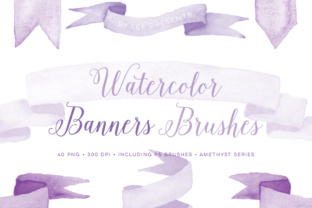
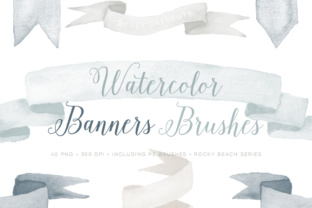
Upon loading the Watercolor Banner Photoshop Brushes into my workspace, the immediate visual personality was clear. These are not rigid, geometric shapes; they possess a soft, organic flow that suggests a handmade touch. The texture mimics the way water interacts with paper, creating natural gradients and slightly irregular edges. In the current market, where customers crave authenticity over sterile perfection, this style resonates strongly. The mood is elegant yet playful, making it suitable for a wide demographic ranging from nursery decor enthusiasts to boutique wedding planners.
For a small business branding strategy, these brushes offer a distinct advantage. They allow you to create a cohesive brand identity without needing expensive custom illustrations. The softness of the strokes adds perceived value to a digital download, making a simple text-based invitation feel like a premium, hand-painted piece. However, it is crucial to recognize that this style leans towards the feminine, rustic, or modern-boho niches. If your target audience prefers bold, high-contrast streetwear or ultra-minimalist corporate designs, these specific brushes might require significant modification to fit the brand voice.
Integrating Into Real Product Lines
The true test of any commercial design asset is its adaptability across different product types. I tested the Watercolor Banner Photoshop Brushes across several categories to see where they shone brightest. For printable wall art and nursery prints, the results were exceptional. The organic banners provided a perfect frame for typography, allowing me to create instant sticker designs and greeting cards that felt unique. When exporting these as high-resolution PNGs, the transparency remained clean, ensuring they layered beautifully over patterned backgrounds.
In the realm of print-on-demand, I experimented with t-shirt designs and mug designs. The watercolor effect worked particularly well for tote bags and tumblers, where the soft edges softened the overall look of the merchandise. I also found them highly effective for creating social media graphics and promotional visuals. A simple banner created with these brushes can instantly elevate a blog header or an Instagram story template, providing a professional look that stands out in a crowded feed. Furthermore, when bundled with other elements, they formed the backbone of attractive design bundles and clipart collections, increasing the average order value of my shop listings.
Enhancing Product Presentation and Listings
Beyond the final product, these brushes serve a critical function in the presentation phase of selling online. High-quality product mockups are essential for converting browsers into buyers. Using the Watercolor Banner Photoshop Brushes to create custom frames for my listing images helped establish a strong visual hierarchy. Instead of relying on generic stock photos, I could craft custom thumbnails that hinted at the artistic quality of the items inside. This attention to detail builds customer trust and significantly boosts click-through potential on platforms like Etsy and Amazon Handmade.
When organizing a seasonal collection, consistency is key. By applying the same brush strokes across a range of invitation templates, planner stickers, and packaging design elements, I maintained a unified aesthetic. This visual storytelling signals to the customer that they are purchasing from a curated, professional source rather than a random assortment of files. The ability to quickly generate decorative layouts means I can produce more content in less time, a vital factor for any busy creative entrepreneur managing multiple shops.
Strategic Limitations and Best Practices
While the versatility of these brushes is impressive, there are specific scenarios where caution is required. Because the nature of watercolor involves soft edges and varying opacity, these assets are not ideal for projects requiring crisp, hard lines. For example, if you are planning a Cricut project or a Silhouette cut file, the default output may not translate well into an SVG design without vectorization. The soft edges can result in jagged cuts or lost details during the weeding process. Similarly, for tiny sticker details or intricate logos, the texture might blur when scaled down, reducing legibility.
I also advise against using these brushes on dark backgrounds without adjusting the opacity or color mode first. Watercolor effects often rely on white space to convey lightness; placing them directly on black or navy blue can make the design appear muddy or invisible. Additionally, avoid overcrowding your thumbnails with too many brush strokes. A cluttered layout diminishes the impact of the main subject. Always ensure you have sufficient contrast between the banner and the text or image it supports to maintain readability.
Practical Seller Notes for Commercial Success
To maximize the return on investment for this graphic design asset, follow these practical steps before publishing your listings. First, always test the design on real product mockups to see how it translates to physical goods. Check the appearance on both white and dark backgrounds to ensure versatility. Verify the PNG transparency meticulously; even a slight halo around the edges can ruin the illusion of a high-end illustration.
If you intend to convert these raster brushes into vectors for cutting machines, inspect the SVG cut quality closely. You may need to trace the paths manually to achieve clean lines. Confirm that your file resolution is high enough for large-format printing, such as posters or banners. Organize your files clearly for customers if you are selling the brushes themselves or including them in a bundle. Pair these textures with complementary typography—serif fonts for elegance, sans-serif for modernity, or script fonts for a handwritten feel—to complete the design.
Finally, and most importantly, confirm the commercial license terms. Ensure you have the right to use the Watercolor Banner Photoshop Brushes in finished products for sale, whether they are sublimation designs, digital downloads, or physical merchandise. Understanding these boundaries protects your business and ensures you remain compliant with marketplace rules. By treating these brushes as a strategic tool rather than just a decorative element, you can significantly enhance the professionalism and appeal of your online shop.